Best Home Espresso Grinders in 2026: Ranked
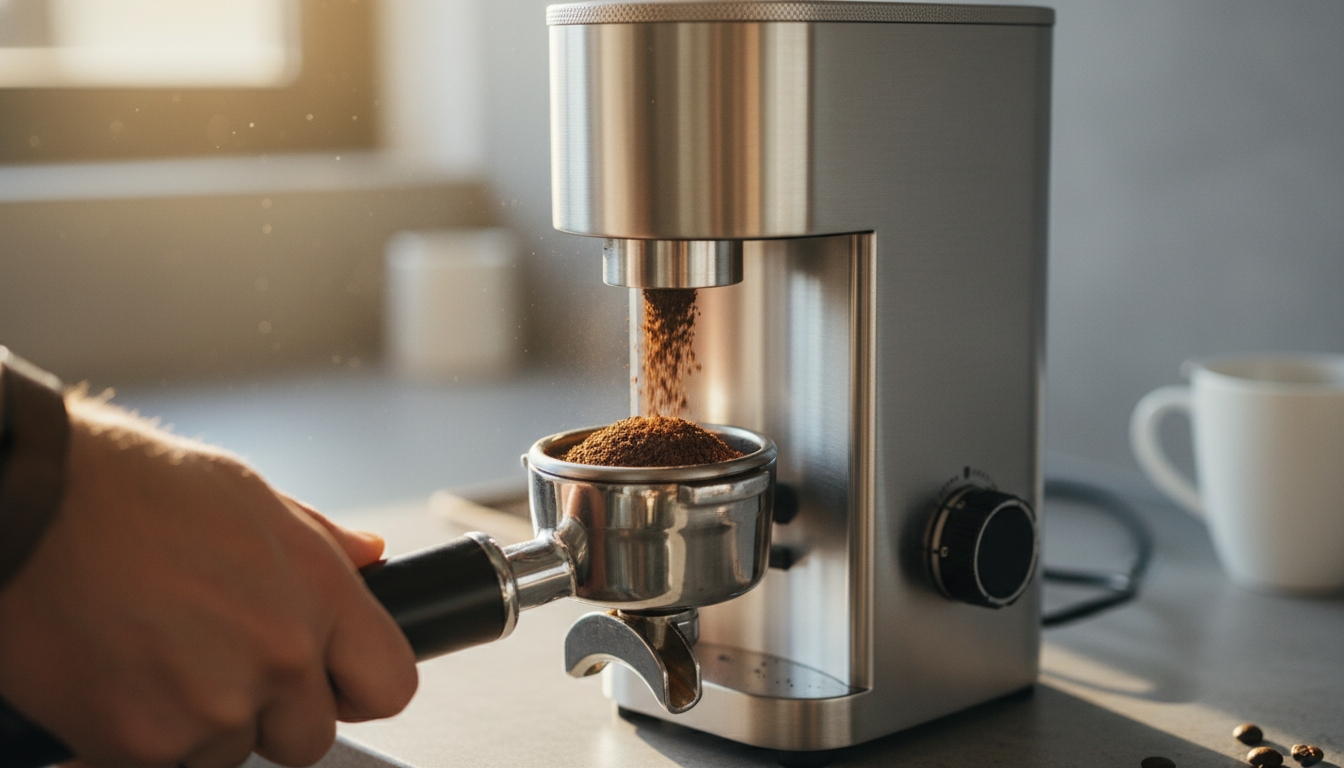
The grinder matters more than most people expect. A mediocre grinder paired with a great machine produces mediocre espresso — the inverse is rarely true. These are the best home espresso grinders available right now, organized by where they sit in the market.
Why Espresso Grinding Is Different
Espresso demands a narrower, more consistent grind than any other brew method. You’re pushing water through a puck at 9 bars of pressure, so particle distribution and stepless adjustment aren’t nice-to-haves — they determine whether your shot channels or chokes.
Burr geometry matters too. Flat burrs tend to produce a more bimodal distribution (fewer fines relative to coarser particles), while conical burrs retain more fines, which can add body and sweetness. Neither is universally better, but they pull differently and reward different dialing habits.
Retention — how much ground coffee stays inside the grinder between doses — is a practical concern for home use. High-retention grinders waste coffee and make shot-to-shot consistency harder when you’re switching beans.
Entry Level: Eureka Mignon Filtro and Baratza Sette 270
The Baratza Sette 270 (~$500) uses a unique straight-through grinding path that gives it near-zero retention. Grounds fall directly into the portafilter. The stepped adjustment has 270 positions, which sounds like a lot until you realize espresso lives in a narrow band — but it’s enough. It’s noisy and the plastic build feels its price, but the shots it produces outperform its cost.
The Eureka Mignon Filtro (~$400–$450) is quieter, better built, and has stepless macro adjustment. It sits on a single flat burr set. Retention is low. For a first serious espresso grinder, the Mignon Filtro is arguably the better recommendation for anyone who values a quieter kitchen and prefers physical build quality.
If your budget is below $300, the DF54 from DF64’s smaller sibling is worth considering — it performs above its price with a 54mm flat burr, though dosing consistency takes practice.
Mid-Range: DF64 Gen 2 and Eureka Mignon Specialita
The DF64 Gen 2 (~$350–$450 depending on retailer) punches well above its price. It uses 64mm flat burrs, stepless adjustment, and has low retention with a bellows included to purge grounds. The grind quality is legitimately competitive with grinders twice its cost. Build quality is decent but not exceptional.
The Eureka Mignon Specialita (~$600–$650) is the Filtro’s more refined sibling — quieter motor, better burr geometry, touchscreen timer for dose control, and a more refined workflow. It’s the grinder that fits cleanly on a kitchen counter and doesn’t require apology. If aesthetics and usability matter alongside performance, the Specialita earns its premium over the Filtro.
For light-roast focused home baristas in this range, the Niche Zero (~$700) deserves mention. Its conical burr produces sweet, clean shots with excellent clarity. Single-dosing is the intended workflow, and the zero-retention design makes it genuinely convenient. It’s not the sharpest tool for very dark roasts, but for specialty coffee it’s exceptional.
Prosumer: Lagom P64 and Weber Key
The Option-O Lagom P64 (~$1,000–$1,100) offers a range of burr options — the standard SSP Multipurpose burrs are versatile, while the Unimodal and Cast Steel options let you tune the flavor profile for light or dark roasts. The workflow is clean, retention is low, and it’s built to last. This is where grinders start genuinely competing with commercial equipment.
The Weber Key (~$1,800+) is the most technically refined single-dose grinder at the prosumer level. Magnetic catch cup, extremely low retention, and burr options that give you serious control over grind character. At this price it needs to be a considered purchase, but it’s genuinely excellent.
What Budget Actually Gets You
- Under $400: Usable espresso grinder, some workflow compromises, replace in 3–5 years as your palate develops
- $400–$700: Strong performance, low retention, stepless adjustment — most home baristas stop here permanently
- $700–$1,100: Burr options, build quality, and grind consistency that approaches commercial standards
- $1,100+: Diminishing returns for most, genuine gains for those dialing in light roasts or running high volume
The jump from under-$400 to the $500–$700 tier is the most impactful upgrade most home espresso setups can make.
How to Choose
Match the grinder to your machine and your workflow, not to aspiration. A Lagom P64 on a Breville Bambino isn’t wrong, but a Specialita or DF64 Gen 2 is the right answer for most machines in the $500–$1,500 machine range.
Consider your bean habits. If you buy in variety and single-dose frequently, prioritize low retention — the Niche Zero, DF64 Gen 2, or Weber Key. If you run through one bag at a time on a hopper, retention matters less and the Specialita’s hopper workflow is actually convenient.
Single-dosing has become the dominant home workflow, and it’s worth designing around.
Bottom line: For most home setups, the DF64 Gen 2 or Eureka Mignon Specialita hits the right balance of performance, workflow, and price. If light roasts are your focus and budget allows, the Niche Zero is the cleaner recommendation. Everything above $1,000 is for people who know exactly why they need it.